
Medical Records Indexing Services Practices
Somewhere in your EHR there’s an attachment called SCAN0047.pdf. It might be a cardiology consult. It might be last month’s lunch order. Nobody knows, and the patient is on the schedule this afternoon. I’m Mark, a registered nurse, and I open those files, work out what they are, and file them where your provider will actually look.
Free 30-minute call. No patient information needed.
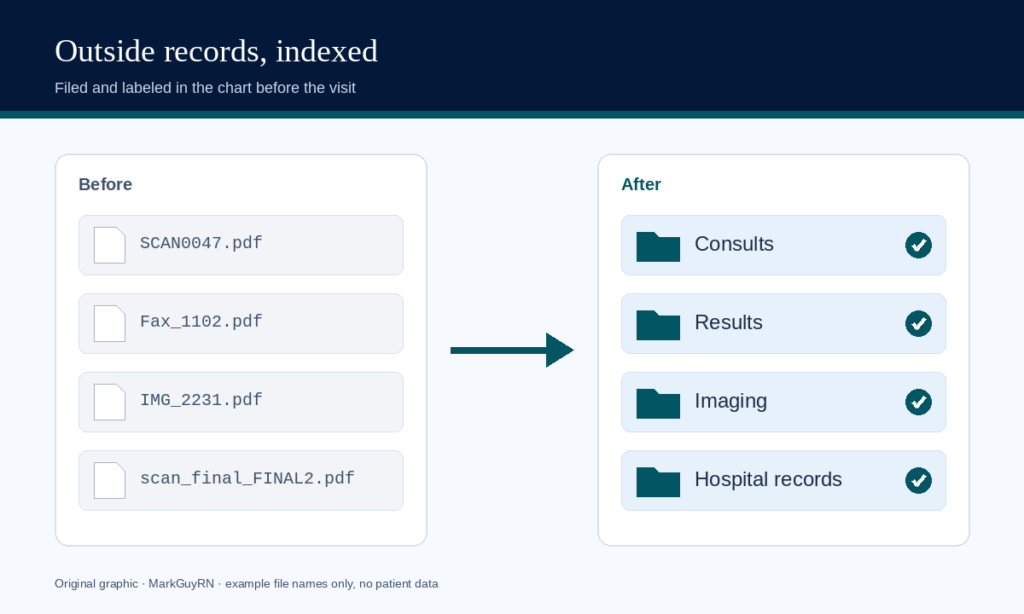
Outside Records that Land in the Right Place
Indexing sounds fancy. It means every document gets a name, a date, a type and a home in the chart. Consult notes go under consults. Discharge summaries go with the right encounter. A 47-page records dump gets split into the pieces your provider needs, and the rest stays filed and findable instead of buried.
- Outside records and consult notes, labeled by type, date and source.
- Referral packets, checked against what the referral needs, with gaps flagged.
- Lab and imaging results, staged in the results area your practice uses.
- Hospital and ER paperwork, attached for the follow-up visit.
- Written records requests for anything your provider needs and the chart doesn’t have.
Before I file a single page, we agree your naming rules and categories, so every document lands the way your providers already search for it. Good medical records indexing services should feel boring in the best way: your provider types “echo” and the echo shows up. No treasure maps, no folders called “New Folder (3).”
Records Requests, in Writing, Tracked
When a record your provider needs isn’t in the chart, I can send a written request through the channels your practice approves, such as fax, portal or EHR messaging. I keep a simple list of what’s still outstanding so nobody has to remember it. If a quick phone call would get there faster, we can sort out who makes it when we agree the scope.
Labs and Imaging, Where your Provider looks first
Results that arrive by fax or outside portal get staged and labeled with the test and the date. If a result your protocol expects is missing, or a report doesn’t seem to match the patient or the order, I flag it for your team. I don’t interpret results. Your provider reads them and makes the call.
One Tuesday’s Fax Pile
Example only, not real patient data. Fictional details, no real names, dates of birth or record numbers.
- SCAN0047.pdf: a cardiology consult (fictional), filed under Consults with date and source.
- Fax_1102.pdf, 12 pages: split into a discharge summary, a medication list and an imaging report, each filed and labeled.
- Outside lipid panel: filed under Results, labeled with the date.
- Referral packet for Patient B: missing the latest office note. Flagged, and a written request sent.
- One page with no patient name on it: set aside and flagged for your team, never guessed.
Why it helps when the Person filing knows Charts
Moving a file is easy. Knowing that the file is a stress test report and not a sleep study, or that a “final” discharge summary has an addendum two pages later, is where a nursing background earns its keep. I spent seven years as an ER nurse and six as a virtual office manager for a US practice, so I’ve seen most of the ways a document can hide.
If you’ve been weighing whether to outsource medical data entry services, think of this as the version where the person filing your records can tell a consult note from a lab requisition, and flags the odd page instead of filing it under “Misc.”
Indexing often pairs with the rest of the morning: medication list prep, chart completeness checks and new-patient chart setup, regular chart audits, or one dedicated chart-prep VA handling all of it.
What stays with your team
Release-of-information decisions, billing, coding and every clinical decision stay with your practice. I organize, label and flag.
Questions Practices Ask
What is medical records indexing?
It means giving every document a name, a date, a type and a home in the chart. A consult goes under consults, a discharge summary goes with the right encounter, and your provider types “echo” and the echo appears. It’s supposed to feel boring, in the best way.
How do you handle a 100-page records dump or a fax packet?
I open it, work out what’s inside, and split it into the pieces your provider needs, each labeled by type, date and source. The rest stays filed and findable instead of buried in one giant PDF. Nobody should have to scroll to page 165 to find an allergy list.
What happens to a page with no patient name, or one that seems to belong to someone else?
I set it aside and flag it for your team. I never guess where a page belongs. If the details don’t match what’s in the chart, it waits for a person at your practice to decide. A delayed page is a smaller headache than a misfiled one.
Do you use our naming rules and categories?
Yes. Before I file a single page, we agree your document types and naming rules, so everything lands where your providers already look. I work inside your EHR or document system, not in outside copies. Your categories, your search habits, my very tidy filing.
Can you help clear a backlog?
Yes, and we scope a backlog separately from day-to-day indexing. I’ll give you an honest read on pace once I’ve seen what’s actually in the pile, not before. Every practice has a drawer, folder or fax queue it doesn’t mention at parties, and I’m happy to meet it.
How do you chase records that aren’t in the chart?
I send written requests through the channels your practice approves, like fax, portal or EHR messaging, and keep a simple list of what’s still outstanding. That way nobody has to remember who was asked for what. Release-of-information decisions stay with your team.
Do you interpret the results you file?
No. I stage results where your provider looks first, labeled with the test and date, and flag anything missing or mismatched with the patient or the order. Your provider reads the result and makes the call. My job is making sure the right page is in the right place.
Let’s give SCAN0047.pdf a real name
Book a free 30-minute call. Tell me your EHR and roughly what your fax queue looks like on a Monday.
Prefer writing first? Send me a message. Business details only, please, no patient information.
